
24/7 Pest Control in Queens, NY | Mice, Rats, Roaches, Bed Bugs, Ants & More
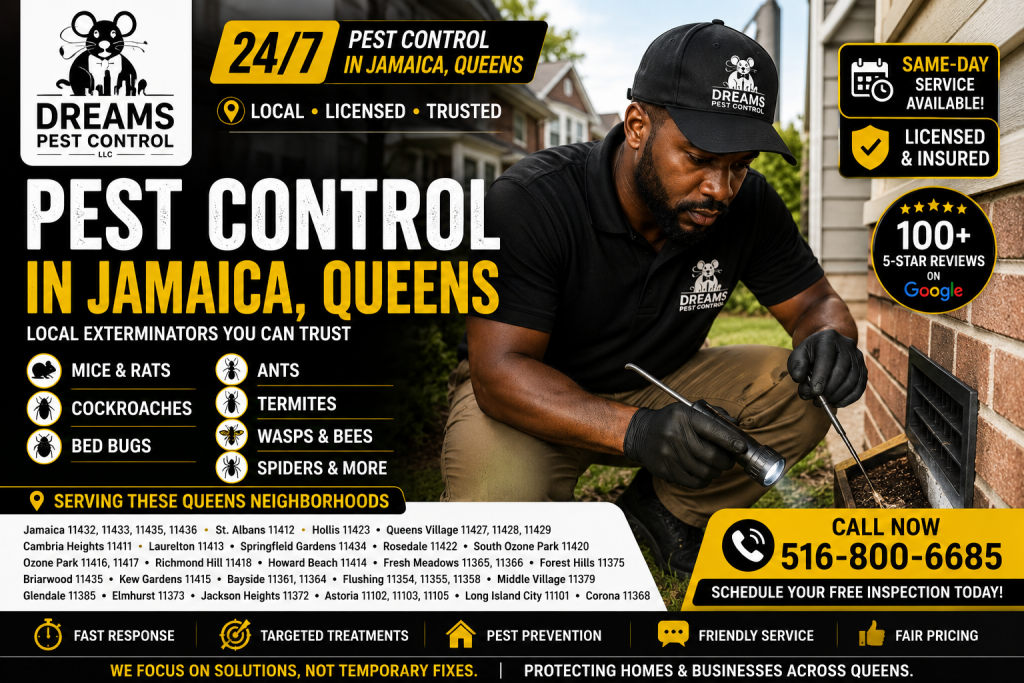
Dreams Pest Control provides fast, professional pest control in Queens, NY for homeowners, landlords, property managers, restaurants, apartment buildings, offices, and commercial properties. If you’re searching for an exterminator near me, pest control near me, mouse exterminator, rat control, cockroach exterminator, bed bug treatment, ant control, termite inspection, or wasp nest removal in Queens, our team is ready to help.
Need an exterminator in Queens today?
Yes — Dreams Pest Control offers same-day and 24/7 pest control service in Queens for mice, rats, roaches, bed bugs, ants, wasps, spiders, fleas, termites, and other pest problems. We inspect, treat, seal entry points when needed, and help prevent pests from coming back.
Serving Queens neighborhoods: Jamaica 11432, 11433, 11435, 11436 • St. Albans 11412 • Hollis 11423 • Queens Village 11427, 11428, 11429 • Cambria Heights 11411 • Laurelton 11413 • Springfield Gardens 11434 • Rosedale 11422 • South Ozone Park 11420 • Ozone Park 11416, 11417 • Richmond Hill 11418 • Howard Beach 11414 • Fresh Meadows 11365, 11366 • Forest Hills 11375 • Briarwood 11435 • Kew Gardens 11415 • Bayside 11361, 11364 • Flushing 11354, 11355, 11358 • Middle Village 11379 • Glendale 11385 • Elmhurst 11373 • Jackson Heights 11372 • Astoria 11102, 11103, 11105 • Long Island City 11101 • Corona 11368.
We don’t believe in temporary fixes. Our pest control process starts with a detailed inspection to find where pests are entering, nesting, feeding, or hiding. From there, we use targeted treatment, professional baiting, trapping, monitoring, rodent exclusion, and prevention methods designed to protect your home or business long term.
Why Are Pest Problems Increasing in Queens, NY?
Many homeowners ask why they suddenly have mice, rats, cockroaches, ants, or other pests—even if they’ve never had problems before. The answer is usually a combination of changing weather, construction, aging buildings, and easy access to food and shelter. Throughout Queens, rodents and insects continue to move between neighboring homes, apartment buildings, restaurants, and commercial properties, making professional pest control more important than ever.
Mice Can Enter Through Openings Smaller Than You Think
One of the biggest reasons homeowners search for mouse exterminator near me or mouse control in Queens is because mice only need a very small opening to enter a structure. Utility pipe gaps, foundation cracks, damaged weather stripping, garage doors, dryer vents, and HVAC penetrations are all common entry points. Once inside, mice can contaminate food, damage insulation, chew electrical wiring, and reproduce quickly if the problem isn’t addressed.
Rodents Become More Active During Seasonal Weather Changes
As temperatures become colder in the fall and winter, rodents actively search for warm places with food and water. During hotter months, rats and mice may also move indoors looking for cooler environments. Homes, apartment buildings, crawl spaces, basements, garages, and utility rooms often provide everything rodents need to survive. Early inspections and rodent exclusion can help reduce the chance of a larger infestation.
Cockroaches Spread Quickly Inside Multi-Family Buildings
German cockroaches remain one of the most common pest problems throughout New York City. They can travel between apartments through plumbing lines, electrical openings, shared walls, ceilings, and hallways. Because they reproduce rapidly, addressing the problem early is often much easier than waiting until the infestation grows.
Prevention Is Often More Affordable Than Major Treatments
Many pest problems begin with a few unnoticed entry points or small signs of activity. Regular inspections, sealing accessible openings, reducing moisture, proper food storage, and maintaining clean storage areas can help lower the risk of future infestations. Preventive pest management is often less expensive than dealing with a large established infestation.
Frequently Asked Question
What is the best way to prevent mice and other pests?
The most effective approach combines regular inspections, sealing accessible entry points, removing food and water sources, reducing clutter, monitoring for activity, and treating problems early. Every property is different, so the right solution depends on the type of pest, the structure, and the conditions around the home or business.
Common Pest Problems in Queens Homes & Businesses
Bed bugs, fleas, ants, and termites are some of the most searched pest problems in Queens because they often go unnoticed until the infestation becomes larger. Knowing what to look for early can help protect your home, apartment, business, and property from costly damage and unnecessary stress.
Bed Bug Treatment & Bed Bug Removal
Bed bugs are excellent at hiding in mattresses, box springs, furniture, bed frames, baseboards, and small cracks near sleeping areas. Many people first notice itchy bites or small blood spots on sheets, but not everyone reacts to bites. Bed bugs spread by traveling on luggage, clothing, furniture, and personal belongings—not because a home is dirty. Early inspections and professional bed bug treatment can help prevent an infestation from spreading to additional rooms.
Flea Control for Homes & Pets
Fleas can become a serious problem after pets spend time outdoors or when wildlife has been present around a property. Adult fleas may only be a small part of the population because eggs, larvae, and pupae can remain hidden in carpets, rugs, furniture, pet bedding, and floor cracks. Successful flea control often requires treating both the environment and pets under the guidance of a veterinarian when appropriate.
Ant Control & Carpenter Ants
Ants are one of the most common household pests throughout Queens, especially during warmer months. Sugar ants are attracted to food and moisture, while carpenter ants can nest in damp or water-damaged wood. Simply spraying visible ants rarely solves the problem because the colony may remain active behind walls, beneath floors, or outdoors. Identifying the species helps determine the most effective treatment approach.
Termite Inspections & Termite Treatment
Termites work quietly behind walls, under floors, and inside wooden structural components. Homeowners often discover termite activity after noticing damaged wood, mud tubes, discarded wings, or doors and windows that suddenly become difficult to open. Regular termite inspections can help identify activity before significant structural damage occurs and allow treatment to begin sooner.
Frequently Asked by Queens Homeowners
What pests cause the most damage to homes?
While every infestation is different, termites can damage wooden structures over time, rodents may chew electrical wiring and insulation, cockroaches can contaminate food preparation areas, bed bugs can spread throughout a home if left untreated, and carpenter ants may take advantage of moisture-damaged wood. Addressing pest activity early is often the best way to reduce repair costs and limit the spread of an infestation.
More Pest & Wildlife Problems We Help Solve
Not every pest problem involves mice or cockroaches. Queens homeowners and businesses also deal with spiders, wildlife, stinging insects, mosquitoes, flies, pantry pests, and seasonal invaders. Identifying the pest early and taking the right approach can help protect your property and reduce future pest activity.
Spider Control
Most spiders found in New York are not dangerous, but large numbers of webs often indicate an active insect population nearby. Spiders commonly hide in basements, garages, attics, crawl spaces, storage rooms, and around exterior lighting where insects gather. Reducing insects and removing web-building areas can help lower spider activity around your home or business.
Wildlife Removal
Raccoons, squirrels, birds, and other wildlife can enter attics, crawl spaces, chimneys, garages, and rooflines looking for shelter. Wildlife activity may lead to damaged insulation, contaminated areas, unpleasant odors, and entry points that rodents can later use. Humane removal and properly securing entry points are important parts of resolving many wildlife issues.
Wasp & Hornet Nest Removal
Wasps and hornets often build nests under eaves, decks, sheds, fences, rooflines, soffits, and around outdoor structures. Disturbing an active nest can increase the risk of multiple stings. Professional nest removal helps reduce that risk while addressing the source of the problem.
Mosquito Control
Mosquitoes breed in standing water and become more active during warmer months. Bird baths, clogged gutters, planters, buckets, and other containers can provide breeding sites. Reducing standing water and treating high-activity areas can make outdoor spaces more comfortable.
Fly Control
House flies, drain flies, and fruit flies are often linked to food waste, drains, moisture, and organic debris. Proper sanitation combined with identifying the breeding source is important for long-term fly management in homes, restaurants, and commercial properties.
Pantry Pest Control
Indian meal moths, grain beetles, and other pantry pests can be found in flour, cereal, rice, pasta, pet food, bird seed, and dry goods. Regular inspection of stored foods and proper storage practices can help reduce pantry pest problems before they spread throughout the kitchen.
Looking for a Local Exterminator in Queens?
Dreams Pest Control proudly provides professional pest control services throughout Queens for residential and commercial properties. Whether you’re dealing with rodents, insects, wildlife, or seasonal pests, our team focuses on thorough inspections, identifying the source of the problem, targeted treatments, and practical prevention strategies tailored to your property.
Pest Control Services in Queens, NY
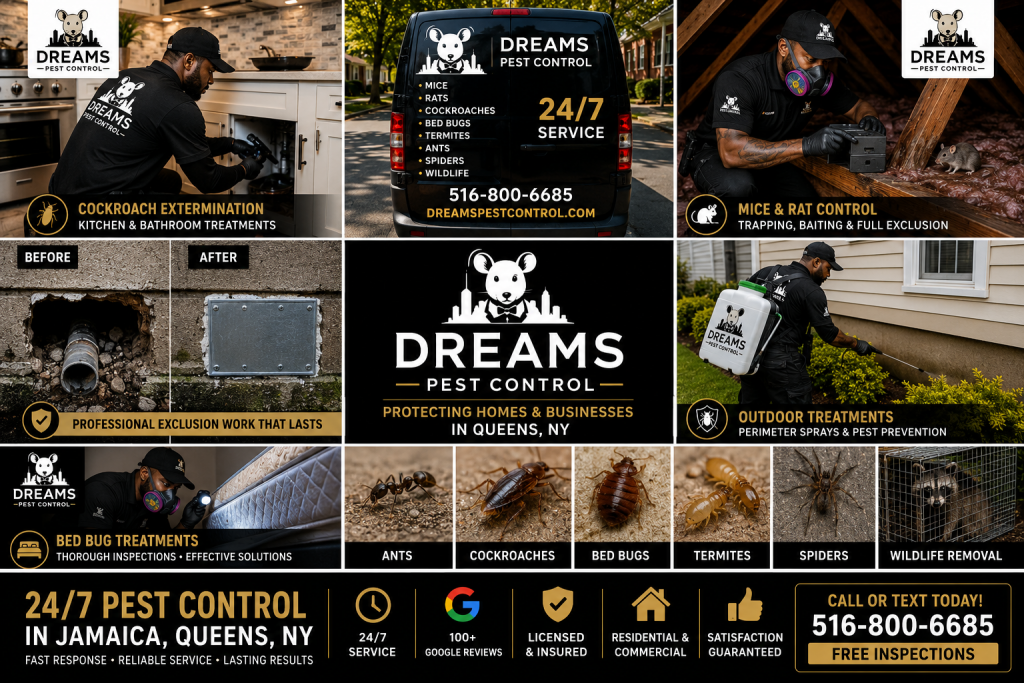
Dreams Pest Control provides local pest control in Queens for mice, rats, roaches, bed bugs, ants, termites, spiders, fleas, mosquitoes, wasps, wildlife, rodent exclusion, residential service, commercial pest control, and 24 hour emergency pest control.
🐭 Mouse Exterminator
Mouse control, traps, bait, sealing holes, pipe gaps, basement entry points, and rodent prevention.
Learn More →🐀 Rat Control
Rat extermination, burrow treatment, bait stations, yard inspections, and exterior rodent control.
Learn More →🪳 Cockroach Exterminator
German roach treatment, kitchen clean-outs, gel bait, dust, and crack and crevice treatment.
Learn More →🛏 Bed Bug Treatment
Bed bug inspection, mattress treatment, furniture treatment, bedroom service, and follow-up options.
Learn More →🐜 Ant Control
Ant exterminator service for kitchens, bathrooms, walls, windows, pavement ants, and carpenter ants.
Learn More →🪵 Termite Treatment
Termite inspections, wood-destroying insect checks, termite treatment, and property protection.
Learn More →🐝 Wasps, Bees & Hornets
Wasp nest removal, hornet control, exterior nest treatment, rooflines, sheds, and siding gaps.
Learn More →🕷 Spider Control
Spider treatment for basements, garages, storage rooms, exterior lights, webs, and insect activity.
Learn More →🦟 Flea Treatment
Flea control for homes, carpets, furniture, pet areas, floor cracks, and active flea infestations.
Learn More →🦝 Wildlife Removal
Raccoons, squirrels, birds, dead animal removal, attic activity, crawl spaces, chimneys, and rooflines.
Learn More →🔧 Rodent Exclusion
Sealing entry points, concrete, metal mesh, pipe gaps, foundation holes, doors, and long-term prevention.
Learn More →🏢 Commercial Pest Control
Pest control for restaurants, offices, stores, apartment buildings, landlords, and property managers.
Learn More →🏠 Residential Pest Control
Home pest control for apartments, houses, basements, kitchens, bedrooms, garages, and multi-family homes.
Learn More →🚨 Emergency Pest Control
24/7 exterminator service for urgent mice, rats, roaches, bed bugs, ants, wasps, and pest problems.
Learn More →🦟 Mosquito Control
Mosquito treatment for yards, standing water areas, outdoor spaces, and seasonal mosquito activity.
Learn More →Queens Service Areas
Jamaica 11432, 11433, 11435, 11436 • St. Albans 11412 • Hollis 11423 • Queens Village 11427, 11428, 11429 • Cambria Heights 11411 • Laurelton 11413 • Springfield Gardens 11434 • Rosedale 11422 • South Ozone Park 11420 • Ozone Park 11416, 11417 • Richmond Hill 11418 • Howard Beach 11414 • Fresh Meadows 11365, 11366 • Forest Hills 11375 • Briarwood 11435 • Kew Gardens 11415 • Bayside 11361, 11364 • Flushing 11354, 11355, 11358 • Middle Village 11379 • Glendale 11385 • Elmhurst 11373 • Jackson Heights 11372 • Astoria 11102, 11103, 11105 • Long Island City 11101 • Corona 11368.
🐭 How do I get rid of mice in my house without them coming back?
The best way to control mice is by removing active rodents, sealing entry points, and eliminating food and water sources. Rodent exclusion and routine inspections can help reduce future mouse activity.
🐀 What’s the fastest way to get rid of rats in my home or yard?
The most effective approach is identifying where rats are entering and nesting, then combining traps or bait stations with sanitation and sealing accessible entry points.
🪳 Why do I keep seeing German cockroaches even after cleaning?
German cockroaches hide behind appliances, inside cabinets, and in wall voids. Cleaning helps, but targeted treatment is often needed to address the infestation.
🛏️ How can I tell if I have bed bugs?
Common signs include itchy bites, small blood spots on sheets, dark spotting on mattresses, and live bed bugs or shed skins around beds and furniture.
🐜 What attracts ants into my house?
Ants are attracted to food crumbs, sugary spills, grease, pet food, and moisture. Keeping food sealed, cleaning up spills, and treating the colony can help reduce ant activity.
🪵 What are the first signs of termites?
Mud tubes, discarded wings, damaged or hollow-sounding wood, and doors or windows that suddenly become difficult to open can all be signs of termite activity.
🕷️ Why are there so many spiders in my basement or garage?
Spiders are often attracted to areas where other insects are present. Reducing insect activity, sealing gaps, and minimizing clutter can help lower spider populations.