
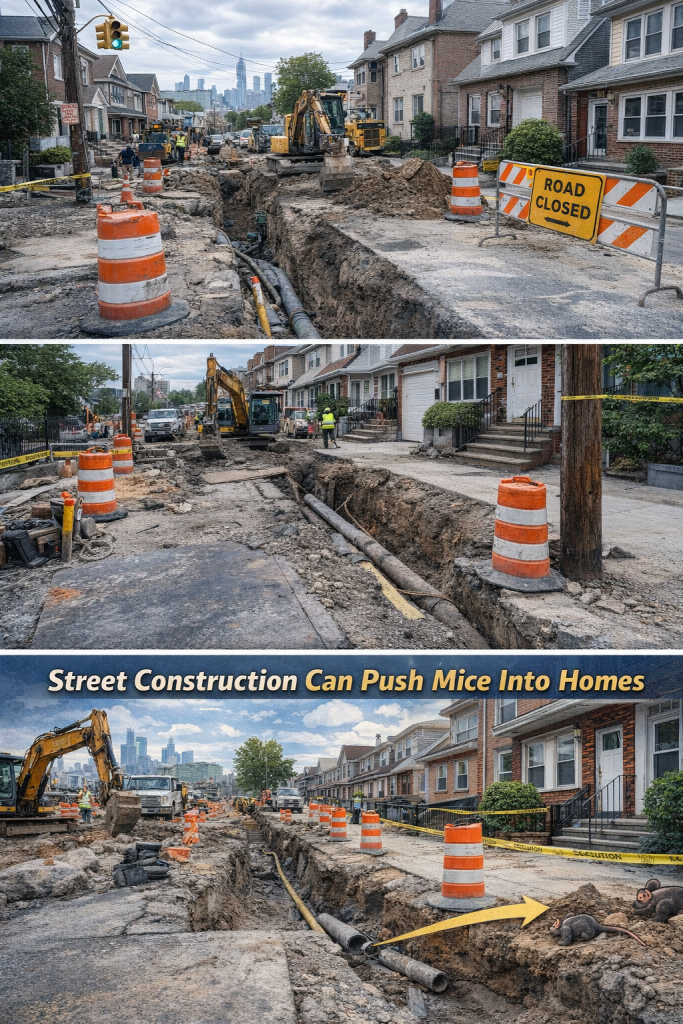
If you have been noticing more mice in homes in Queens lately, especially after street work, sidewalk reconstruction, sewer replacement, or water main construction, you are not imagining the pattern. In many parts of Queens, torn-up streets, excavation, trenching, and utility work can disrupt outdoor rodent harborage and movement paths. For homeowners, landlords, and property managers, that can mean more mice entering homes, basements, and lower-level spaces.
That does not mean construction magically creates a mouse infestation where none existed before. What it can do is increase pressure. When the ground is disturbed, rodents that were already living around a block may start shifting routes and testing nearby buildings more aggressively. This is why many people start searching for answers after nearby road work begins and they suddenly notice droppings, scratching noises, or movement in the basement.
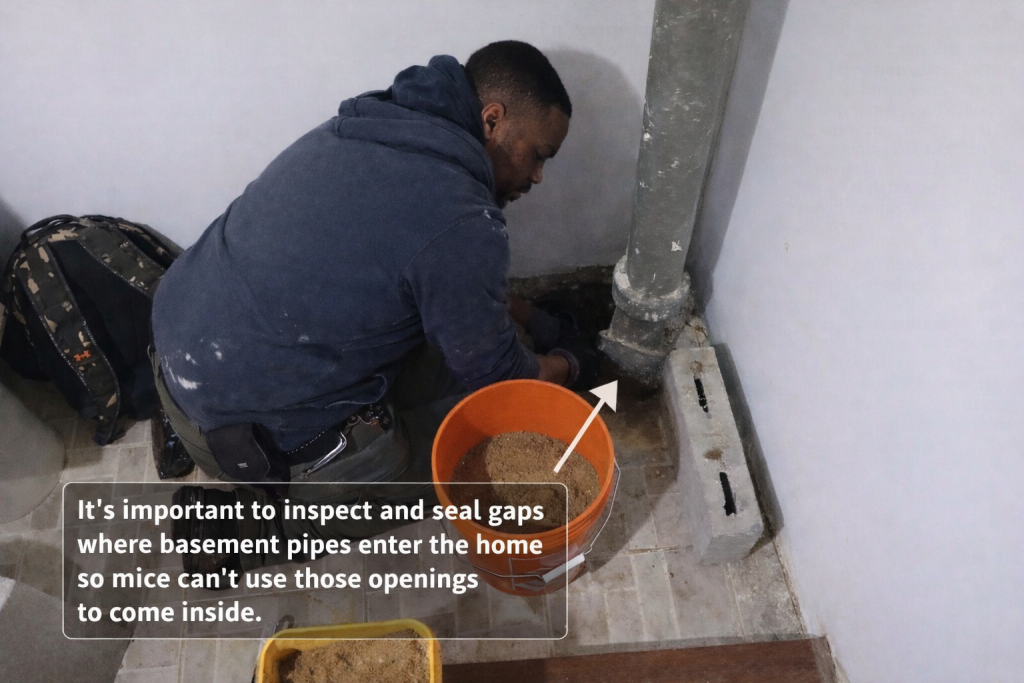
So why are mice coming into houses in Queens when the street is being torn up? The answer is simple. Outdoor pressure rises, and any home with easy entry points becomes an opportunity. A mouse only needs a very small opening to squeeze inside. That means a tiny gap around a pipe, a basement vent, a foundation crack, or a cellar door can turn into the start of a full mouse problem.
Can street construction cause mice to enter homes?
Yes, it can contribute. Street construction, sewer work, excavation, and torn-up ground can change how mice move through a block. If outdoor hiding places are disturbed or travel routes are interrupted, nearby homes, garages, basements, and mixed-use buildings may get more pressure.
But the more important point is this: the construction may push the movement, but the house decides whether the mice stay. A tightly sealed home with fewer gaps is much less likely to develop a serious mouse infestation than a house with open entry points, clutter, food access, and lower-level vulnerabilities.
That is why rodent control in Queens is never just about what is happening in the street. It is also about the condition of the structure itself. If mice are entering through holes around utility lines, basement edges, door gaps, or vents, those openings need attention fast.
Why do mice move from the street toward homes and basements?
Mice move toward warmth, shelter, food, and water. When outside conditions change, they follow the easiest path to survival. In Queens neighborhoods with excavation, roadway work, sewer replacement, or sidewalk construction, that often means traveling along foundations, under stoops, around utility lines, near trash storage areas, and into lower-level openings.
For many homes, the basement is where the issue starts. Basements, boiler rooms, utility spaces, storage rooms, and cellar doors are common starting points for a mouse infestation in Queens. Once mice get into those lower areas, they can move into wall voids, kitchens, pantries, and living spaces.
This is why homeowners often first notice droppings along basement walls, under the sink, near the stove, or behind stored boxes. If you are hearing scratching in the walls or seeing signs near lower-level areas, there is a good chance the activity started from the ground level up.
EPA-Pest Control: Resources for Housing Managers
How do mice get into older homes in Queens?
Older homes in Queens are often more vulnerable because they have more repair history, settling, patched openings, aging mortar, and unsealed penetrations. In neighborhoods like Jamaica, St. Albans, Hollis, Queens Village, Cambria Heights, Laurelton, Springfield Gardens, and Rosedale, many homes have older foundations, basement vents, cellar doors, and pipe penetrations that can become mouse entry points if not sealed properly.
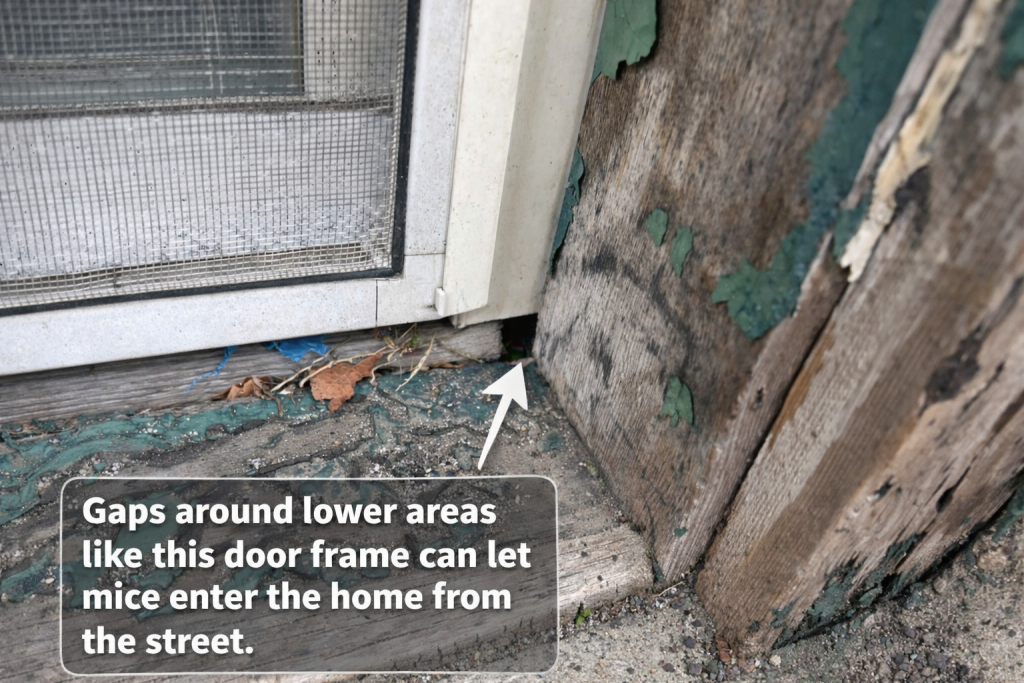
Even a small opening can be enough. A foundation crack, a gap where utilities enter the home, a missing door sweep, or a damaged vent screen can all give mice access. Many homeowners do not realize how little space mice need until they start seeing signs indoors.
This is why homes that seem fine on the surface can still have a hidden mouse problem. You may not notice the gap until pressure outside increases. Once nearby ground is disturbed, those weak points get tested more often.
Why do mouse problems get worse after street work?
Mouse problems often get worse after street work because pressure gets concentrated. Construction can disturb what was already outside and make hidden rodent activity more visible. You may go from barely noticing an occasional sign to suddenly hearing movement at night, finding droppings in the kitchen, or seeing activity in the basement.
That does not always mean the construction created the problem from scratch. It often means the construction exposed a weak point in the property. If the building is open around utility lines, cellar doors, garage gaps, or foundation edges, mice may continue entering no matter how many are trapped indoors.
This is why mouse exclusion service is just as important as mouse removal. Catching mice already inside helps, but if the building is still open, new mice can continue testing the structure.
CDC-Controlling Wild Rodent Infestations
What are the signs of a mouse infestation in Queens homes?
A lot of people search this question after nearby excavation begins. Common signs include droppings, scratching in the walls, gnawing on food packages, movement along basement edges, activity under sinks, and sightings near the stove or pantry.
In some homes, the earliest sign is hearing movement after dark. In others, it is finding droppings in the basement or seeing fresh gnaw marks on stored food or packaging. Some homeowners notice a strong odor in storage spaces or utility areas. Others see activity in side yards, near steps, or around the foundation before the problem shows up inside.
If you are seeing these signs after nearby utility work, road work, or torn-up sidewalks, do not wait for the issue to get worse. Fast inspection can make a major difference before a small problem turns into a full infestation.
Can sewer or utility work increase rodent activity?
Yes, it can increase visible activity and movement pressure. Queens has ongoing infrastructure work tied to drainage, sewer systems, street reconstruction, and water distribution. For residents, that means more periods where outdoor ground conditions are changing block by block.
When that happens, the better question is not whether the project itself is bad. These projects are necessary. The better question is whether your home is ready for the added pressure. If nearby conditions shift and your house has accessible gaps, clutter, food sources, or dark lower-level openings, mice may treat it like the safest option on the block.
That is why homeowners, landlords, and property managers should take rodent prevention seriously during and after nearby construction.
What is the best way to keep mice out of a house in Queens?
The best way to keep mice out is a combination of inspection, exclusion, sanitation, and monitoring. That means identifying likely entry points, sealing them properly, reducing food access, reducing clutter, and using the right trapping plan where needed.
For Queens homes, the most common problem spots include:
• Basement vents
• Cellar doors
• Side-door sweeps
• Gaps around gas and water lines
• Foundation cracks
• Utility penetrations
• Rear-yard access points
• Garage door gaps
• Spaces around conduits and cables
If your goal is real mouse proofing in Queens, the work has to be detailed. Missing even one active opening can keep the problem going. This is why many homeowners need both trapping and sealing, not just one or the other.
A $1.9 Billion Plan For Southeast Queens
Why Queens homeowners should pay close attention right now
Queens is the kind of borough where mouse issues can move from outside to inside fast because of density, mixed building types, aging housing stock, and constant infrastructure activity. In southeast neighborhoods especially, residents often deal with torn-up roads, utility work, drainage upgrades, and repeated construction phases. In those conditions, a home with vulnerable lower-level openings can become the easiest target.
This is why searches like mouse control Queens NY, rodent control Queens NY, mice exterminator Jamaica Queens, rodent control St. Albans NY, mouse control Hollis Queens, exterminator Cambria Heights NY, mice removal Laurelton NY, pest control Springfield Gardens NY, and rodent control Rosedale Queens all point to the same real issue. People want answers fast when they start seeing mice moving indoors.
City Begins $51.8 Million Infrastructure Project in Rosedale, Queens That Will Prevent Flooding, Improve Water Distribution, Add New Roads
Is this just a nuisance, or is it a health issue too?
It is both. Mice are a nuisance because they contaminate food, leave droppings, cause odor, and create stress. But it is also a health issue because rodent droppings, urine, and contamination inside kitchens, storage spaces, and basements should never be ignored.
For homeowners, landlords, and property managers, this matters even more in apartments, multifamily homes, and mixed-use buildings. Once mice move through shared walls, utility chases, and basement spaces, the issue can spread far beyond one room or one unit.
CDC-You Can Prevent Hantavirus
That is why early action matters. The longer the problem goes on, the harder it becomes to control.
If the ground is being torn up on your block in Queens and you suddenly have mice coming into the house, the connection is real enough to take seriously. Street construction, excavation, sewer replacement, and road work can disturb existing rodent activity and increase movement into surrounding properties.
But the deeper truth is that mice stay where entry is easy. Homes with gaps around the foundation, pipe penetrations, basement vents, cellar doors, and utility lines are the ones most likely to turn outside pressure into an indoor infestation.
For homeowners in Jamaica, St. Albans, Hollis, Queens Village, Cambria Heights, Laurelton, Springfield Gardens, Rosedale, Fresh Meadows, Briarwood, Richmond Hill, Ozone Park, Forest Hills, Elmhurst, Woodside, Ridgewood, Astoria, and Long Island City, the goal should be simple: do not wait until the signs get worse. A proper inspection, smart mouse exclusion, and fast rodent control service can stop a small issue before it becomes a full infestation.
If mice are entering through basement gaps, foundation cracks, or utility openings after nearby street or sewer work, acting early can save you from months of droppings, scratching, contamination, and repeat sightings.
Serving Queens neighborhoods with mouse and rodent control
Dreams Pest Control helps homeowners and property managers with mouse infestations, rodent control, mouse exclusion, and pest control services across Queens, including Jamaica, St. Albans, Hollis, Queens Village, Cambria Heights, Laurelton, Springfield Gardens, Rosedale, Fresh Meadows, Briarwood, Richmond Hill, Ozone Park, Forest Hills, Elmhurst, Woodside, Ridgewood, Astoria, and Long Island City.
If you are dealing with mice in the basement, mice in the walls, or mice entering through holes around the home, fast action makes a difference.
FAQ
Can street construction cause mice to enter homes?
Yes. Street construction, sewer work, and ground disturbance can increase mouse pressure and push rodents toward nearby homes, especially if the structure has easy entry points.
Why are mice coming into my basement in Queens?
Basements often have the easiest access points, including vents, cellar doors, pipe penetrations, and foundation gaps. Mice usually start low and then spread upward.
Do mice move when the ground is disturbed?
Yes. Disturbed ground can disrupt their outdoor routes and hiding spots, which may make nearby homes more attractive.
How do mice get into older homes in Queens?
They often enter through foundation cracks, utility openings, basement vents, damaged door sweeps, and unsealed gaps around pipes and cables.
What are the signs of a mouse infestation?
Common signs include droppings, scratching in walls, gnawing on food packaging, activity in the basement, sightings near kitchens, and odor in hidden areas.
Can sewer or utility work increase rodent activity?
Yes. It can increase movement and pressure in the area, especially if rodents were already active nearby.
What is the best way to keep mice out of a house?
The best way is through inspection, exclusion, sanitation, and trapping where needed. Sealing entry points is one of the most important steps.


Leave a Reply