DREAMS PEST CONTROL
HOMES · BUSINESSES · BUILDINGS · WAREHOUSES
QUEENS, NEW YORK / THE OCTOBER PEST GUIDE
October Pest Control
in Queens, NY
Mice beneath the floor. Squirrels in the roof. Roaches behind the equipment. Here’s why fall pest activity deserves a closer look—and what we do about it.
9 Pest Groups. A Plan for Your Property.
Inspection · Prevention · Treatment · Exclusion · Follow-Up
LOOK BEYOND THE SIGHTING
Why are pests still active in October?
Scratching above the ceiling. Droppings under the sink. A squirrel looking out of a hole by the gutter. October has its own warning signs, and they are easy to overlook until pests start showing up inside.
Fall pest control in Queens starts with understanding what is happening around the property. Some pests are looking for protected winter shelter. Others already have what they need inside: food, moisture and places to hide. Cooler weather does not automatically end a pest problem.
For homeowners, tenants, business owners and property managers, the question is bigger than “What can we spray?” We need to know what pest is present, where it is active, how it is getting in and what is keeping it there.
Below, we explain nine pests and pest groups to watch for in October, why they can remain active and what a thorough inspection should address.
9 Pests to Watch This October
01 / MICE
Cooler Nights Make Indoor Shelter Appealing
Mice can remain active throughout the year. In fall, protected spaces in homes, garages and other buildings become particularly useful as outdoor conditions change. An established indoor population can also continue without any new mice arriving from outside.
The kitchen may be where you notice droppings, but the entry point could be in the basement, crawl space or around a utility penetration. Effective mice control means following the evidence beyond the room where the customer first saw activity.
Watch for: repeated droppings, gnawed food packaging, nesting material and scratching in concealed spaces. Sounds alone do not identify the animal.
What we look for: accessible gaps around plumbing, doors, utility lines and foundation openings, along with food sources and areas that need monitoring.
At a Valley Stream property, we found mice entering through a gap around a sewer pipe in the crawl space beneath the home. We sealed the gap to help prevent reentry. This is why an inspection needs to include accessible areas below the living space.
Store pet food securely, clean up spilled food and report new activity after service so follow-up inspections can focus on the right locations.
02 / RATS
An Entry Point Can Be Above Ground Level
Rat control in Queens is a year-round concern. October does not create every infestation, but readily available food, shelter and access can keep a problem going as the season changes. Trash storage, feeding areas, clutter and structural openings all deserve attention.
Do not assume the only place to inspect is along the foundation. The route needs to be confirmed at the actual property.
On a Flushing job, rats were using an open pipe to get inside. We secured the opening with metal mesh as part of the exclusion work. The important lesson is to identify the function of an opening before deciding how to protect it. Vents and drains must continue to work as intended.
Watch for: droppings, gnaw marks, damaged food containers, repeated sightings and burrows around exterior areas.
What we look for: active travel routes, accessible entry points, food sources, shelter and evidence that helps distinguish rats from mice. Rat exclusion, sanitation and monitoring work together; catching an animal does not explain why it was able to enter.
03 / SQUIRRELS
Roof Openings Can Become Access to the Home
Fall is a busy period for squirrels as they gather food and use sheltered nesting places. They belong outdoors, but damaged or vulnerable areas near the roof can create an opportunity to enter a building.
At a Laurelton home, a squirrel made a hole near the gutter at the roof. We located the opening and set up for removal. The next stage is confirming that the animals are out before closing and reinforcing their access.
Watch for: squirrels repeatedly entering the same hole, fresh chewing near the roof, displaced material and running or scratching above the ceiling.
What we look for: the occupied entry point, other accessible openings, roof-edge damage and whether dependent young may be present. Closing a hole before checking what is inside can trap wildlife in the structure.
For squirrel removal in Laurelton and other Queens neighborhoods, we focus on identifying the entry point, planning removal and preventing reentry. The opening should be secured only after confirming that squirrels and any dependent young are no longer inside.
04 / COCKROACHES
Heated Buildings Keep the Problem Going
Cockroaches do not need an October cold snap to become an indoor problem. Kitchens, bathrooms, equipment areas and utility spaces can supply food, water and shelter throughout the year.
Species identification matters. A small German cockroach problem around kitchen equipment needs a different investigation from occasional larger cockroaches appearing near basement or plumbing areas.
Watch for: live insects, shed skins, egg cases and dark spotting in hiding places. A stain or an unexplained odor alone is not enough to confirm an infestation.
What we look for: moisture, crumbs and grease, equipment voids, cabinet seams and openings that connect spaces. In apartment buildings, recurring activity may require coordinated attention beyond one unit.
Cockroach control in Queens should include inspection, targeted treatment where appropriate, sanitation advice and follow-up monitoring. Fixing a leak or an access gap can be as important to long-term results as treating a hiding place.
05 / BED BUGS
October Does Not Switch Them Off
Bed bugs are not fall invaders looking for warmth through an open window. They can be transported on infested furniture, luggage, bedding and other belongings. An occupied indoor space can support an infestation regardless of the month.
Watch for: live bugs, shed skins and dark spotting around mattress seams, bed frames or upholstered furniture. Bites alone cannot confirm bed bugs, and some people do not react visibly.
What we look for: actual specimens, hiding places, nearby furniture and the extent of the affected area. Avoid moving potentially infested belongings into another room before you have a plan.
If you need a bed bug inspection in Queens, early identification helps determine the next step. Treatment preparation and follow-up should match the property and findings. Cooler weather outdoors is not a treatment for a heated bedroom.
06 / YELLOW JACKETS AND WASPS
Warm Fall Days Can Still Bring Activity
Some yellow jackets become noticeable scavengers around food and drinks in late summer and fall. Social wasp colonies can also be large by late summer or early autumn. Activity depends on the species and conditions; one cool evening does not establish that a nest is inactive.
Watch for: repeated insect traffic into a wall opening, ground hole or roof-edge gap, especially near an entrance or outdoor eating area.
What we look for: identification, the nest location or access route, and how the activity affects people using the property.
Keep outdoor food and waste covered. Avoid disturbing the nest or plugging an active opening yourself. Yellow jacket nest removal should be planned around the location and activity, rather than assuming every flying insect is a bee or every nest can be handled the same way.
07 / STINK BUGS AND FALL INVADERS
Looking for Winter Shelter
Brown marmorated stink bugs and multicolored Asian lady beetles may gather on buildings and seek protected overwintering sites as fall progresses. This is different from an insect breeding around food in the kitchen.
Watch for: insects collecting around sunny walls, windows, screens and siding gaps, with some appearing indoors.
What we look for: screen damage, worn weatherstripping and small accessible gaps around the building exterior.
Prevention focuses on reducing access. A few stink bugs indoors do not automatically mean there is an indoor breeding infestation. Correct identification helps avoid unnecessary treatment and directs attention to the openings that need repair.
08 / CLUSTER FLIES AND OTHER FLIES
Identify the Source First
Cluster flies seek sheltered overwintering places in fall and can appear around sunny walls or indoor windows. Their presence calls for a different investigation from drain flies or flies associated with decaying material.
Watch for: repeated fly activity in the same room, around particular windows or near a possible source.
What we look for: the type of fly, where it is concentrated, potential access points and conditions supporting it. Depending on identification, the investigation may focus on exterior gaps, drains, waste or another source.
A fly inspection should explain why the flies are there. Treating visible adults without addressing the source can leave the customer dealing with the same problem again.
09 / SPIDERS
More Sightings Do Not Always Mean an Infestation
Some outdoor spiders enter buildings accidentally, particularly in fall. Others already live indoors. Webs and sightings can also become more noticeable around entrances, storage spaces and areas with insect prey.
Watch for: recurring webs, egg sacs and repeated activity in the same locations.
What we look for: identification, access gaps, clutter and other insects that may provide a food source. One spider is not proof of a widespread infestation.
Removing webs, reducing hiding places and repairing screens can be useful steps. The goal is an appropriate response to the actual findings, rather than treating every spider sighting as an emergency.
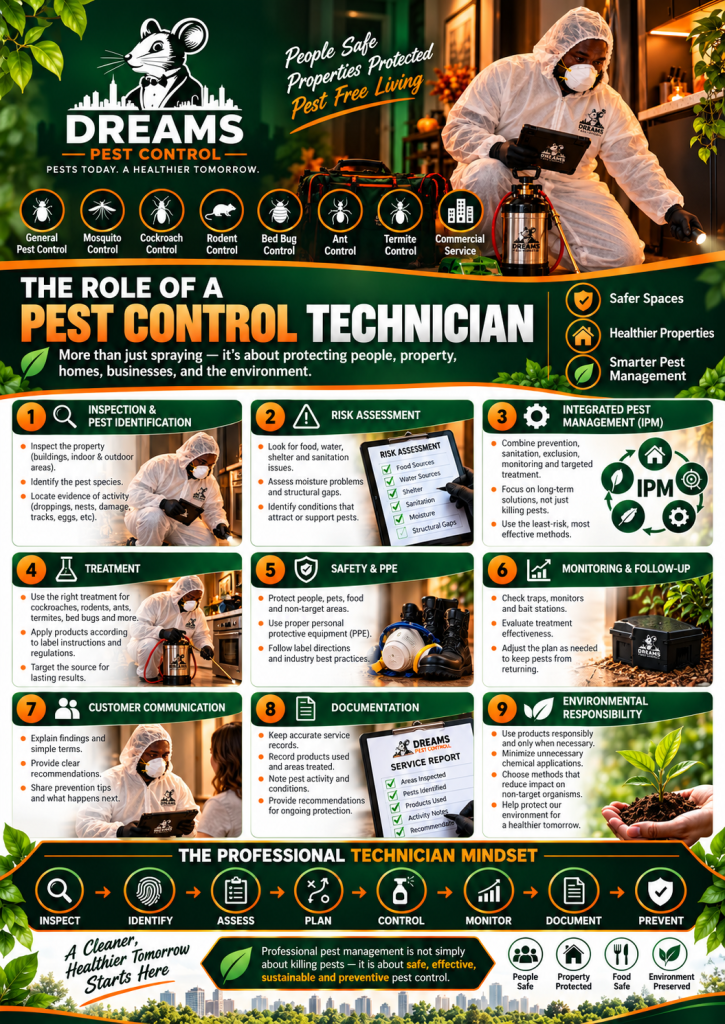
THE ROLE OF A PEST CONTROL TECHNICIAN
What Does a Pest Control Technician Actually Do?
A thorough service starts with inspection and continues with prevention, treatment when needed and follow-up. These nine responsibilities help us build a plan around the conditions at your property:
01 / INSPECTION AND IDENTIFICATION
Find evidence and identify the pest before selecting a response.
02 / RISK ASSESSMENT
Consider people, pets, food areas, access limitations and the conditions found.
03 / INTEGRATED PEST MANAGEMENT
Combine prevention, sanitation, repairs, monitoring and treatment when needed.
04 / TREATMENT
Match the method to the pest, location and product directions.
05 / SAFETY AND PROTECTIVE EQUIPMENT
Use the precautions and equipment required for the work.
06 / MONITORING AND FOLLOW-UP
Check results and investigate continuing or new activity.
07 / CUSTOMER COMMUNICATION
Explain the findings, preparation and practical steps the customer can take.
08 / DOCUMENTATION
Record the inspection, work performed and follow-up recommendations.
09 / ENVIRONMENTAL RESPONSIBILITY
Choose effective measures while reducing unnecessary pesticide use and exposure.
For a home, that may mean investigating a crawl space. For a business, it may mean reviewing receiving doors, food storage and waste areas. In a multiunit building, it may require coordination between occupants, maintenance staff and management.
Your October Prevention Checklist
- Check door sweeps, weatherstripping and window screens.
- Inspect accessible gaps around plumbing and utility lines.
- Have damaged roof-edge areas inspected safely from an appropriate access point.
- Keep food, pet food and garbage in secure containers.
- Clean spills and food residue, including beneath accessible equipment.
- Fix leaks and address persistent dampness.
- Reduce clutter and keep stored items accessible for inspection.
- Photograph pest evidence and record where and when it appears.
- Arrange an inspection for recurring activity instead of guessing from noises or bites.
October Pest Questions, Answered
Why am I seeing more pests when the weather gets cooler?
Some animals and insects seek shelter as outdoor conditions change. Others were already established indoors and continue to find food, moisture and hiding places. An inspection helps distinguish a seasonal visitor from an ongoing infestation.
Are rats and mice only a fall problem?
No. Both can remain active throughout the year. October is a useful time to review access points and food sources, but prevention and monitoring should continue beyond the season.
Does scratching in the ceiling mean squirrels?
Not necessarily. Location, timing and sound can provide clues, but inspection and physical evidence are needed to distinguish squirrels, rodents and other causes.
Can one service handle every October pest?
The plan depends on what is found. Mice, bed bugs, cockroaches and squirrels have different behaviors and require different approaches. Ask which pests, repairs and follow-up visits are included in the proposed service.
Should I wait until winter to get help?
If you have recurring sightings, fresh damage or evidence of activity, arrange an inspection. Waiting for cold weather does not resolve an infestation inside a building.
QUEENS HOMES & COMMERCIAL PROPERTIES
Let’s Find the Source of the Problem
If you are dealing with mice, rats, cockroaches, bed bugs or squirrels in the roof, we start by looking at the evidence and the property conditions behind it.
We provide pest control for homes, businesses, buildings and warehouses across Queens, including Laurelton, Rosedale, Jamaica, Hollis, Queens Village, Springfield Gardens and Flushing.
Sources & Further Reading
- NYC Health: Pest Control Information for Building Residents and Tenants
- NYC Health: Rats
- University of Minnesota Extension: Fall Yard and Garden Pests
- Penn State Extension: Tree Squirrels
- NYC: Cockroaches
- EPA: Protecting Your Home from Bed Bugs
- University of Minnesota Extension: Wasps and Bees
- University of Kentucky: Preventing and Managing Fall Pests
- Penn State Extension: Cluster Flies
- University of Minnesota Extension: Spiders
INSPECT · IDENTIFY · TREAT · EXCLUDE · MONITOR

Leave a Reply