
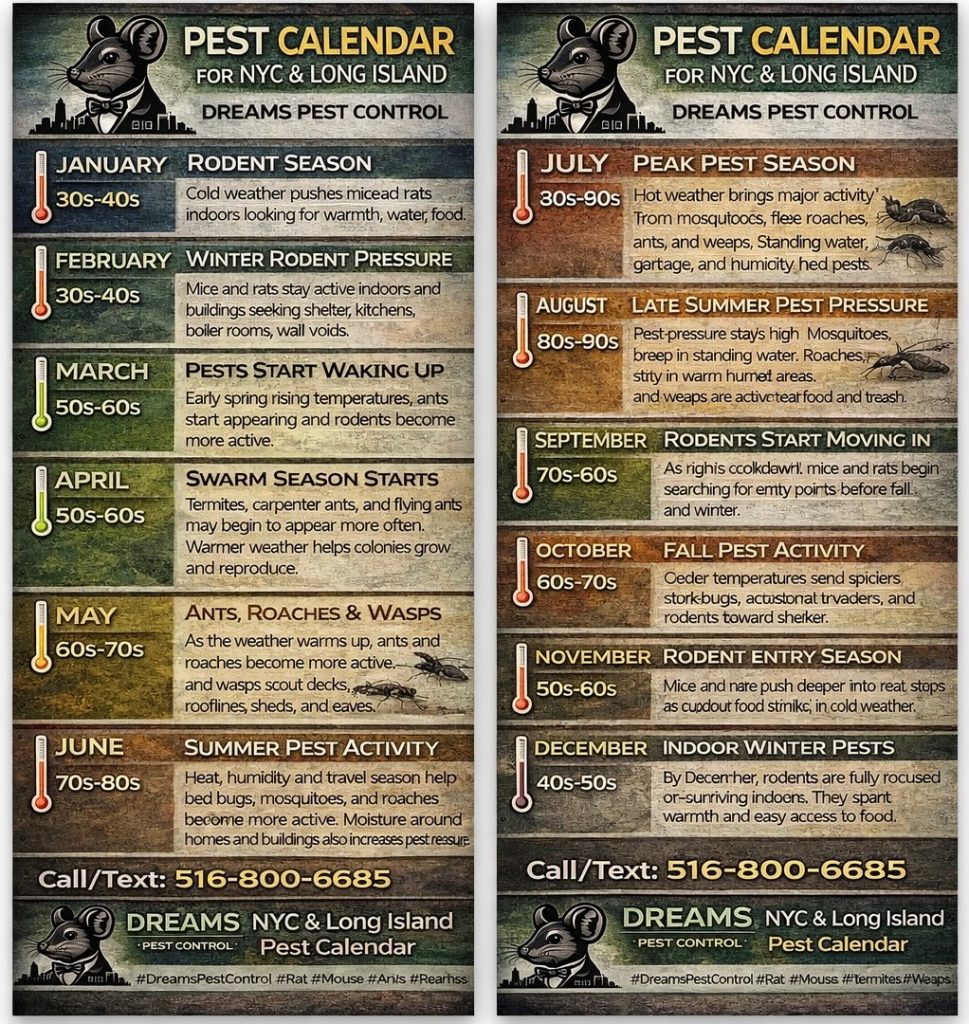
If you live in Queens, Brooklyn, Nassau County, Suffolk County, or anywhere in NYC and Long Island, pest problems do not happen by accident. Every season creates new conditions that attract different pests. Changes in temperature, moisture, humidity, food sources, nesting conditions, garbage buildup, standing water, structural gaps, basements, crawl spaces, kitchens, wall voids, boiler rooms, and outdoor debris all play a major role in when pests become active and why they invade homes and commercial properties.
At Dreams Pest Control, we know that successful pest control in NYC and Long Island starts with understanding the pest cycle month by month. A mouse infestation, rat infestation, cockroach problem, ant infestation, bed bug issue, termite swarm, wasp nest problem, mosquito activity, or wildlife intrusion usually follows predictable seasonal patterns. That is why a pest calendar is so important. It helps homeowners, landlords, tenants, restaurant owners, warehouse managers, property managers, and business owners stay ahead of pest activity before it gets worse.
This guide breaks down what pests are most common each month, why they show up, what conditions attract them, and what you can do to prevent infestations before they turn into a serious pest control emergency.
January: Rodent Season Begins Strong
January is one of the biggest months for mice control and rat control in NYC and Long Island. When outdoor temperatures drop, mice and rats look for warmth, shelter, and easy food access. Homes, apartments, basements, boiler rooms, utility closets, garages, kitchens, pantries, drop ceilings, and wall voids become perfect hiding places.
Why rodents show up in January
Cold weather forces rodents indoors. They are looking for:
• Warm nesting areas
• Water sources from pipes or condensation
• Food crumbs, pet food, garbage, and pantry items
• Shelter in insulation, wall voids, storage boxes, and clutter
Most common January pest problems
• House mice
• Norway rats
• Roof rats
• Rodent droppings in kitchens and basements
• Gnaw marks on wires, cardboard, and food packaging
• Scratching sounds in walls and ceilings
Common causes
A January rodent infestation usually starts because of:
• Holes around pipes
• Gaps under doors
• Cracks in the foundation
• Broken vents
• Open garage doors
• Poor sanitation
• Cluttered storage areas
• Unsealed food
January is the month when many homeowners suddenly realize they need emergency pest control, rodent proofing, mice extermination, and rat exclusion services.
February: Winter Rodent Pressure Continues
February keeps the same pressure going. In fact, mouse removal and rat removal jobs often increase because the rodents that entered in December and January are now fully settled inside the building.
Why February pests remain active
Rodents do not stop moving just because it is cold outside. Once they find:
• Heat
• Nesting material
• Food
• Water
they stay active and continue contaminating the property.
Common February hotspots
• Behind stoves and refrigerators
• Under sinks
• In boiler rooms
• In ceiling voids
• In basements
• Behind walls
• In restaurant storage rooms
• In apartment building trash areas
Main February causes
• Leaking pipes
• Unsealed utility entries
• Overflowing garbage
• Grease buildup
• Bird feeders near the home
• Poorly maintained exterior doors
This is when professional pest control becomes more important than DIY traps alone. If rodents are living inside the walls, insulation, crawl space, or basement, you need more than bait. You need a full rodent inspection, entry point sealing, sanitation advice, and a proper mouse exterminator or rat exterminator.
March: Pests Start Waking Up
March is the transition month. Rodents are still active, but now you start seeing ants, early cockroach activity, and more pest movement in general. As temperatures rise, insects that stayed hidden in winter begin waking up.
Why pests become active in March
• Rising temperatures
• More moisture from rain
• Increased breeding activity
• More human activity and food exposure
• Thawing conditions around foundations and yards
Common March pests
• Ants
• Mice
• Rats
• Roaches in warm indoor areas
• Occasional invaders like centipedes and spiders
What causes March infestations
• Wet conditions near foundations
• Cracks in walls and window frames
• Food crumbs and grease in kitchens
• Moisture under sinks and in bathrooms
• Clutter around storage spaces
March is when many property owners should begin preventive pest control service. Waiting until you already have a heavy ant problem or roach infestation can make treatment harder and more expensive.
April: Swarm Season Starts
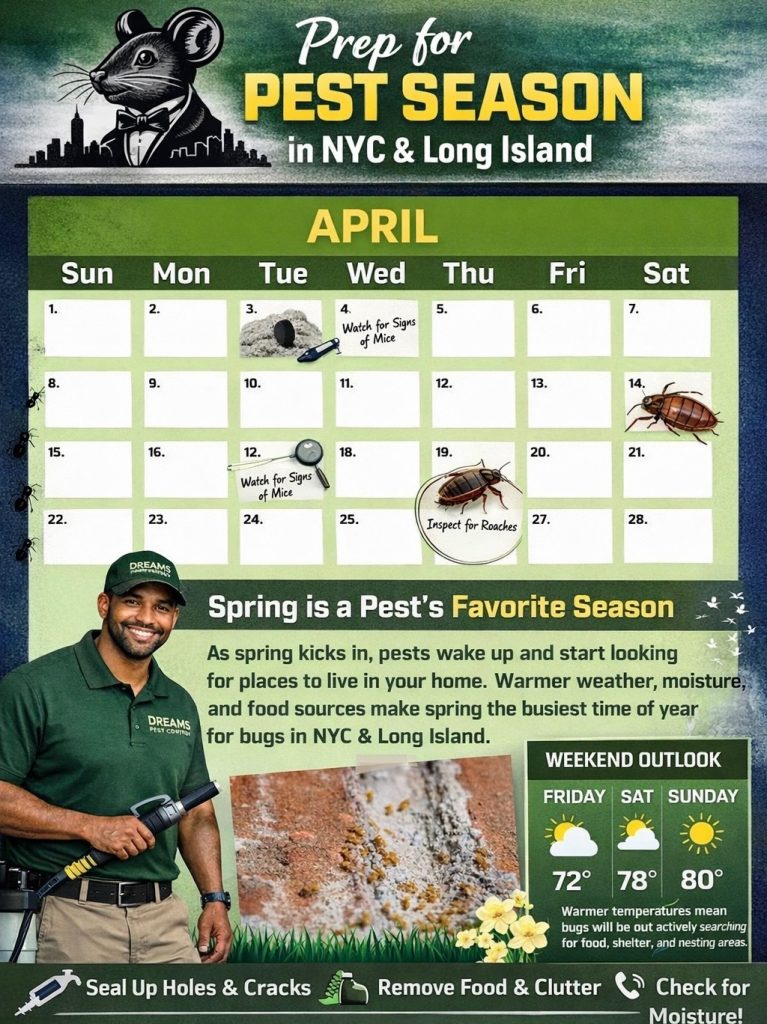
April is one of the most important months in pest control because this is when termites, carpenter ants, and flying ant colonies may start appearing. If you see flying insects around windows, doors, lights, or near wood structures, it may be more than a nuisance.
Why April is dangerous
Warmer weather and higher moisture create ideal conditions for:
• Termite activity
• Carpenter ant movement
• Colony expansion
• Reproductive swarms
Common April pests
• Termites
• Carpenter ants
• Flying ants
• Early wasp activity
• Spiders and occasional stinging insects
Causes of April pest problems
• Damp wood
• Roof leaks
• Poor drainage
• Mulch too close to the home
• Tree limbs touching the structure
• Wood-to-soil contact
• Moist basements and crawl spaces
April is the month to watch for termite inspection needs, especially if you own a house, multi-family property, commercial building, or older structure in Queens, Brooklyn, Nassau County, or Suffolk County. A hidden termite infestation can cause expensive structural damage long before you realize it is there.
May: Ants, Roaches, and Wasps Start Building Pressure
May is when pest season starts feeling real. The weather is warmer, people are outside more, windows open more often, outdoor eating increases, and insect populations begin to rise.
Common May pests
• Ants
• Cockroaches
• Wasps
• Carpenter ants
• Early mosquitoes
• Flies
Why these pests show up in May
Ants come inside looking for food and water. Roaches expand in warm, moist environments. Wasps begin scouting rooflines, soffits, sheds, fences, and eaves to build nests.
Causes of May infestations
• Sweet spills and food crumbs
• Trash cans without tight lids
• Moisture under sinks
• Standing water
• Overgrown yards
• Open vents and gaps around doors
• Greasy kitchens and commercial food prep areas
This is a major month for roach extermination, ant control, wasp control, and preventive pest treatment. Once roaches start breeding inside walls, cabinets, and appliances, they multiply fast.
June: Summer Pest Activity Rises Fast
June brings heat, humidity, travel, and more pest exposure. This month often brings stronger activity from bed bugs, cockroaches, mosquitoes, and flies. Rodents may still be active too, especially in buildings with ongoing sanitation or structural issues.
Common June pests
• Bed bugs
• Cockroaches
• Mosquitoes
• Flies
• Ants
• Wasps
• Rodents in commercial settings
Why June brings more pests
• Heat speeds up insect activity
• Humidity helps pest survival
• More travel increases bed bug risk
• More outdoor gatherings create food waste
• Moisture buildup increases in kitchens, basements, and bathrooms
Common causes
• Luggage exposure from hotels or travel
• Cluttered bedrooms
• Standing water in gutters, buckets, and planters
• Dirty trash storage areas
• Poor drainage
• Wet basements
• Restaurant grease and food debris
June is a prime time for bed bug treatment, mosquito control, cockroach control, and summer pest prevention.
July: Peak Pest Season
July is one of the heaviest months for overall pest control service. This is true across NYC pest control and Long Island pest control because heat and humidity are at their peak.
Major July pests
• Mosquitoes
• Roaches
• Ants
• Wasps
• Bed bugs
• Flies
• Occasional rodents around garbage and exterior zones
Why July is peak season
The combination of:
• Hot weather
• Humidity
• Standing water
• Overflowing trash
• Open doors and windows
• Outdoor cooking
• Increased travel
creates perfect conditions for pest pressure.
July causes
• Bird baths and clogged gutters
• Leaky hoses and outdoor faucets
• BBQ crumbs and food scraps
• Apartment building trash overflow
• Heat inside wall voids and utility spaces
• Poor ventilation
In July, pest problems grow fast. A small roach problem can become a serious cockroach infestation. A little standing water can lead to heavy mosquito activity. A few ants in the kitchen can turn into a full ant trail infestation behind walls and cabinets.
August: Late Summer Pest Pressure Stays High
August: Late Summer Pest Pressure Stays High
August keeps the pressure on. The pests that became active in spring and early summer are now fully established.
Common August pests
• Mosquitoes
• Roaches
• Wasps
• Ants
• Flies
• Bed bugs
• Spiders
• Wildlife activity around yards and garbage
Why August stays busy
Pests thrive in late summer because:
• Food is everywhere
• Heat remains strong
• Humidity continues
• Breeding cycles are already established
• Trash odors attract insects and rodents
Common August causes
• Standing water
• Humid crawl spaces
• Poor sanitation
• Compost or garbage buildup
• Exterior cracks and door gaps
• Outdoor clutter and overgrowth
This is one of the top months for residential pest control, commercial pest control, restaurant pest control, apartment pest control, and warehouse pest control.
September: Rodents Start Moving In Again
September marks a seasonal shift. Insect activity may still be strong, but now mice and rats begin preparing for cooler weather by scouting buildings for entry.
Common September pests
• Mice
• Rats
• Roaches
• Ants
• Spiders
• Wasps
• Stink bugs and occasional invaders
Why rodents appear in September
As nights cool down, rodents start searching for:
• Warm shelter
• Stable food sources
• Dry nesting areas
• Protected entry points before winter
Causes of September rodent issues
• Gaps around utility lines
• Garage door gaps
• Open basement vents
• Foundation cracks
• Exterior clutter
• Food storage problems
• Bird seed and pet food left outside
September is the best time to schedule rodent exclusion, mice prevention, rat prevention, and entry point sealing before winter infestation season starts.
October: Fall Pest Activity Increases
October brings a mix of indoor and outdoor pest pressure. As temperatures drop, pests that lived outside all summer start pushing inward.
Common October pests
• Mice
• Rats
• Spiders
• Stink bugs
• Roaches
• Ants
• Occasional boxelder bugs and cluster flies
Why October infestations happen
Cooler temperatures force pests to find shelter. Homes and businesses offer:
• Warmth
• Food
• Water
• Hidden nesting locations
Main October causes
• Door sweeps missing
• Unsealed siding and vents
• Cluttered basements
• Cardboard storage
• Crawl space openings
• Roof gaps
• Food debris in kitchens and break rooms
October is a strong month for fall pest control, rodent control service, roach treatment, and home pest inspection.
November: Rodent Entry Season
November is one of the biggest months for mouse exterminator calls and rat exterminator service. Outdoor food becomes scarcer, and rodents push deeper inside.
Common November pests
• Mice
• Rats
• Roaches in warm buildings
• Spiders
• Pantry pests in some homes
Why rodents invade in November
Rodents are driven by survival. They want:
• Easy food
• Protected nesting
• Warmth
• Less exposure to predators and cold
What causes November infestations
• Exterior holes
• Poor garbage management
• Broken basement windows
• Utility gaps
• Pipe penetrations
• Open crawl spaces
• Food storage issues
This is when a rodent infestation can get serious fast. Droppings, urine contamination, chewing damage, and odor problems often get worse if not handled quickly.
December: Indoor Winter Pests Take Over
By December, most outdoor pest pressure slows down, but indoor pest pressure remains strong. Rodents are now fully focused on surviving inside.
Common December pests
• Mice
• Rats
• Cockroaches in heated buildings
• Pantry pests
• Spiders
• Occasional bed bug cases from travel and holiday guests
Why December pests stay active
Indoor heat, holiday food, travel, deliveries, decorations, and clutter all create pest opportunities.
December causes
• Holiday cooking crumbs
• Storage clutter
• Cardboard boxes
• Unsealed pantry goods
• Travel-related bed bug exposure
• Warm apartment buildings
• Basement moisture
December is the month for indoor pest control, winter pest control, mouse proofing, rat proofing, and roach control service.
What Causes Pest Problems Most of the Time?
No matter the month, most pest infestations happen because of a few repeat conditions:
- Food sources
Crumbs, grease, pet food, open pantry items, garbage, and food residue attract pests fast.
- Water and moisture
Leaking pipes, condensation, damp basements, clogged gutters, wet crawl spaces, and standing water support many pests.
- Entry points
Tiny cracks, pipe gaps, broken vents, window gaps, basement openings, roofline gaps, and door sweeps allow pests inside.
- Clutter
Cardboard boxes, storage piles, debris, cluttered garages, and packed basements give pests hiding places.
- Poor sanitation
Overflowing garbage, grease buildup, neglected trash areas, and dirty food preparation spaces create ideal pest conditions.
- Seasonal weather changes
Extreme cold, rising spring temperatures, heat, humidity, and rainfall all influence pest behavior.
Why Preventive Pest Control Matters in NYC and Long Island
Too many people wait until the infestation is obvious. By then, pests may already be breeding inside walls, contaminating food, damaging structures, or spreading through the building.
Preventive service helps with:
• Early detection
• Entry point sealing
• Nest reduction
• Sanitation correction
• Moisture control
• Monitoring pest activity
• Long-term pest prevention
For homes, apartments, restaurants, offices, warehouses, stores, schools, and multi-family buildings, routine pest management is often cheaper than waiting for a major infestation.
When Should You Call a Professional Pest Control Company?
You should call a professional exterminator if you notice:
• Droppings
• Gnaw marks
• Scratching in walls
• Roaches during the day
• Ant trails that keep returning
• Flying termites or carpenter ants
• Bites from bed bugs
• Mosquito swarms around standing water
• Wasps building nests near entrances
• Foul pest odors
• Repeated pest sightings even after DIY treatment
A licensed pest control company in Queens, NYC, and Long Island can identify the source, target the problem correctly, and help prevent repeat infestations.
Use the Pest Calendar to Stay Ahead
Every month brings different pest pressure. January and February hit hard with mice and rats. Spring brings ants, termites, and carpenter ants. Summer explodes with mosquitoes, roaches, wasps, bed bugs, and flies. Fall pushes rodents back indoors. Winter keeps indoor pest problems alive.
The key is not just reacting — it is staying ahead.
At Dreams Pest Control, we help homeowners and businesses with rodent control, mice extermination, rat removal, cockroach extermination, ant control, bed bug treatment, termite inspections, wasp nest removal, mosquito control, pest proofing, exclusion work, and ongoing pest prevention throughout Queens, Brooklyn, NYC, Nassau County, Suffolk County, and Long Island.
If you are seeing signs of pest activity, hearing scratching in the walls, finding droppings, noticing roaches in the kitchen, or just want to protect your home before pest season gets worse, now is the time to act.
What pests are most common in NYC during winter?
The most common winter pests in NYC are mice, rats, and cockroaches. Cold weather pushes rodents indoors looking for warmth, food, and water, while cockroaches stay active in heated buildings, kitchens, basements, and wall voids.
When do mice start coming inside homes?
Mice usually start coming inside homes in early fall, especially in September and October, as temperatures begin to drop. They look for warm shelter, food sources, and safe nesting areas before winter gets worse.
What month are termites most active in Long Island?
Termites are usually most active in spring, especially in April and May in Long Island. This is when warmer temperatures and moisture can trigger termite swarms and increase termite activity around homes and buildings.
Why are cockroaches worse in summer?
Cockroaches are worse in summer because heat, humidity, moisture, and food exposure help them survive and reproduce faster. Warm kitchens, basements, restaurants, bathrooms, and trash areas create ideal conditions for roach activity.
When should I schedule preventive pest control?
The best time to schedule preventive pest control is before pest activity peaks, usually in early spring and early fall. Regular pest control service helps stop infestations before they start and keeps homes and businesses protected year-round.
Do rodents come back every fall?
Yes, rodents often come back every fall because cooler weather pushes mice and rats indoors again. If entry points are not sealed and food or shelter is available, rodents may return season after season.
What attracts ants into kitchens and bathrooms?
Ants are attracted to kitchens and bathrooms by food crumbs, sugar, grease, water, leaks, and moisture. Even small spills, damp sinks, and pet food can attract ants into a home or business.
How can I keep mosquitoes away from my yard?
To keep mosquitoes away from your yard, remove standing water, clean gutters, trim overgrown grass and bushes, and keep outdoor areas dry and clean. Mosquitoes breed in water, so stopping water buildup is one of the best ways to reduce mosquito activity.
Call/Text: 516-800-6685
Website: DreamsPestsControl.com


Leave a Reply